Contents
The Foundation: Rules for Drivers Aged 55 to 69
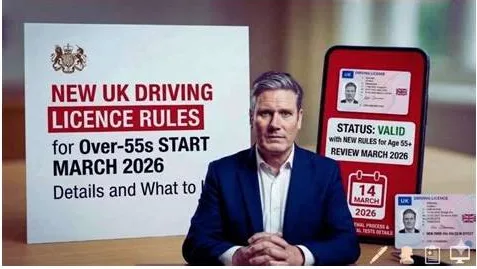
Mandatory Renewal: The 70th Birthday Milestone
The single most crucial date for any driver over 55 is their 70th birthday. At this point, the licence validity period changes from the standard decades-long term to a much shorter one. The Three-Year Renewal Cycle Once you reach 70, your driving licence must be renewed every three years to remain valid. The DVLA will usually send a renewal application form (D46P) about 90 days before your 70th birthday, and then every three years thereafter. The renewal process is straightforward and free of charge. It can be completed online via the official GOV.UK website or by post. Declaration of Medical Fitness and Eyesight The renewal is not a test, but a formal declaration. When renewing, you must confirm two things: * You meet the minimum eyesight standard (the 20-metre number plate test). * You are medically fit to drive and have declared any notifiable medical conditions to the DVLA. It is vital to be truthful in this declaration. The DVLA relies on the driver and their healthcare professionals (GP, optician) to ensure public safety.Upcoming DVLA Changes: What to Expect in 2025 and Beyond
The most significant updates for older drivers are not the current rules, but the changes being proposed and implemented by the DVLA and the Department for Transport (DfT) to modernise the process and enhance road safety. These changes are the freshest and most critical pieces of information for drivers over 55. 1. Mandatory Eyesight Tests for Senior Drivers (Proposed) While not yet law, there are strong proposals, potentially effective from July 2025, that could mandate regular, formal eyesight checks for drivers over a certain age (often cited as 70+ or 60+). * The Current Rule: Self-declaration of meeting the 20-metre standard. * The Proposed Change: Drivers may be required to undergo a professional eyesight test, possibly every three years, coinciding with the licence renewal cycle. This is a move to replace self-assessment with verifiable medical evidence, addressing concerns that age-related vision decline, such as cataracts or glaucoma, often goes unreported. 2. Introduction of the Digital-First Renewal Process From November 2025, the DVLA is expected to roll out a more streamlined, digital-first renewal process for older drivers, potentially starting from age 62. This initiative aims to: * Simplify Administration: Make the three-year renewal process faster and more convenient for senior drivers who are comfortable using online services. * Reduce Paperwork: Transition away from the paper-based D46P form, reducing administrative delays. 3. Potential for Mandatory Medical Checks/GP Certification There have been discussions and proposals for more rigorous medical checks for drivers aged 70 and over, possibly starting in 2025. These may include: * GP Certification: Requiring a GP or other healthcare professional to certify the driver's fitness, particularly for individuals with complex or multiple health conditions. * Fitness to Drive Assessments: In specific cases, the DVLA may request a full medical assessment or a practical driving assessment to confirm competency, especially where conditions like dementia, Parkinson's disease, or severe mobility issues are present.Notifiable Medical Conditions: A Comprehensive List
A key responsibility for all drivers, particularly over 55, is understanding which notifiable medical conditions must be declared to the DVLA. This is not about immediately losing your licence; it is about ensuring the DVLA can assess your fitness and potentially issue a short-term licence or one with specific restrictions. The following is a non-exhaustive list of conditions that must be declared:- Neurological Conditions: Epilepsy, Strokes, Transient Ischaemic Attacks (TIAs), Parkinson's disease, Dementia, and Narcolepsy.
- Cardiovascular Conditions: Atrial Fibrillation, Pacemakers (if fitted recently), Angina (if it affects driving), and other serious heart conditions.
- Metabolic/Endocrine Conditions: Diabetes (if treated with insulin or tablets that carry a risk of hypoglycaemia).
- Vision Impairments: Conditions affecting both eyes, such as Glaucoma, Cataracts, or Diplopia (double vision), if they impact the minimum eyesight standard.
- Psychiatric Conditions: Severe anxiety, depression, or psychotic disorders (if they affect judgment or concentration).
- Mobility Issues: Any physical disability that affects the ability to control the vehicle safely.