Contents
The Definitive Truth: Official UK State Pension Rates 2025/2026
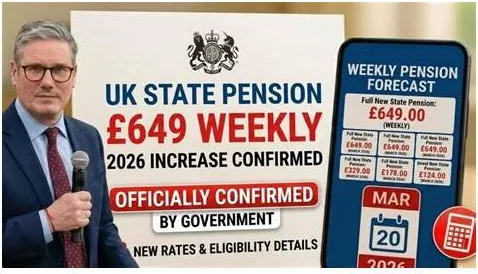
- Full New State Pension Rate (2025/2026): The confirmed full rate is £230.25 per week.
- Annual Equivalent: This equates to £11,973 per year.
- Increase Mechanism: This rate reflects the annual increase applied under the Triple Lock guarantee, which ensures the pension rises by the highest of three measures: Inflation (as measured by CPI), average earnings growth, or 2.5%.
- Full Basic State Pension Rate (2025/2026): The full rate for the Basic State Pension is £176.45 per week.
- Annual Equivalent: This equates to approximately £9,175 per year.
- Additional Pension: Many recipients of the Basic State Pension also receive an Additional State Pension (known as SERPS or State Second Pension) based on their National Insurance Contributions record, meaning their total weekly payment is often higher than the basic rate.
The Truth Behind the £649 Weekly State Pension Rumour
The sudden appearance and widespread circulation of the £649 State Pension figure is a classic example of online misinformation, specifically targeting the financial anxieties of retirees. The intention behind the original search query is often rooted in a desire for a significant improvement in retirement living standards. Where Did the £649 Figure Come From? While the precise, single origin of the £649 figure is difficult to pinpoint, it is widely believed to stem from a combination of factors:- Clickbait and Misleading Content: Numerous unverified news sites and YouTube channels have used the "£649" figure in their headlines to attract views and clicks, often misrepresenting or exaggerating minor policy discussions or hypothetical scenarios.
- Misinterpretation of Parliamentary Data: In some cases, large, complex numbers from official sources, such as a reference to "Volume 649" of a parliamentary debate on benefit uprating, can be lifted out of context and misconstrued as a monetary figure.
- Hypothetical Calculations: The figure may be loosely related to activist proposals to link the State Pension to a percentage of the National Living Wage or a living wage calculation for a couple, then incorrectly attributed to the DWP. For instance, some petitions have called for a rate closer to £549 per week, which is still dramatically different from the official rate.
Understanding the Triple Lock and Future Pension Projections
The actual driver of State Pension increases is the Triple Lock, a government commitment that guarantees the annual uprating of the State Pension by the highest of three factors: Consumer Price Index (CPI) Inflation, the average increase in earnings growth, or 2.5%. How the Triple Lock Determines Your Pension The Triple Lock calculation uses data from the previous September to determine the rate for the following April's Tax Year.- Inflation (CPI): Measures the change in the cost of living.
- Earnings Growth: Measures the increase in average wages across the UK.
- 2.5% Floor: A minimum increase, even if Inflation and Earnings Growth are lower.
4 Key Strategies for Maximising Your Retirement Income (Beyond the State Pension)
Since the £649 weekly payment is not a reality, focus must shift to practical, proven strategies for maximising your legitimate retirement income.- Check Your National Insurance (NI) Record: The full New State Pension requires 35 qualifying years of National Insurance Contributions (NICs). Check your official government record online. If you have gaps, you may be able to fill them by making voluntary NICs to significantly boost your final weekly payment.
- Claim Pension Credit: This is one of the most underclaimed benefits in the UK. Pension Credit acts as a vital top-up for those on a low income, even if they have some savings or a small private pension. Crucially, successfully claiming Pension Credit can unlock access to other benefits, such as a free TV Licence for those over 75, Housing Benefit, and Council Tax reductions.
- Understand the State Pension Age: The State Pension Age is rising. It is currently 66 and is scheduled to increase to 67 and then 68. Knowing your exact State Pension Age is vital for financial planning to avoid a gap between your last working day and your first State Pension payment. The State Pension Age Review is an ongoing process.
- Review Private and Workplace Pensions: The State Pension is only one leg of the retirement stool. Regularly review your private and workplace pensions. Consolidating old pots and ensuring you are contributing enough will have a far greater impact on your weekly retirement income than waiting for a hypothetical £649 payment.